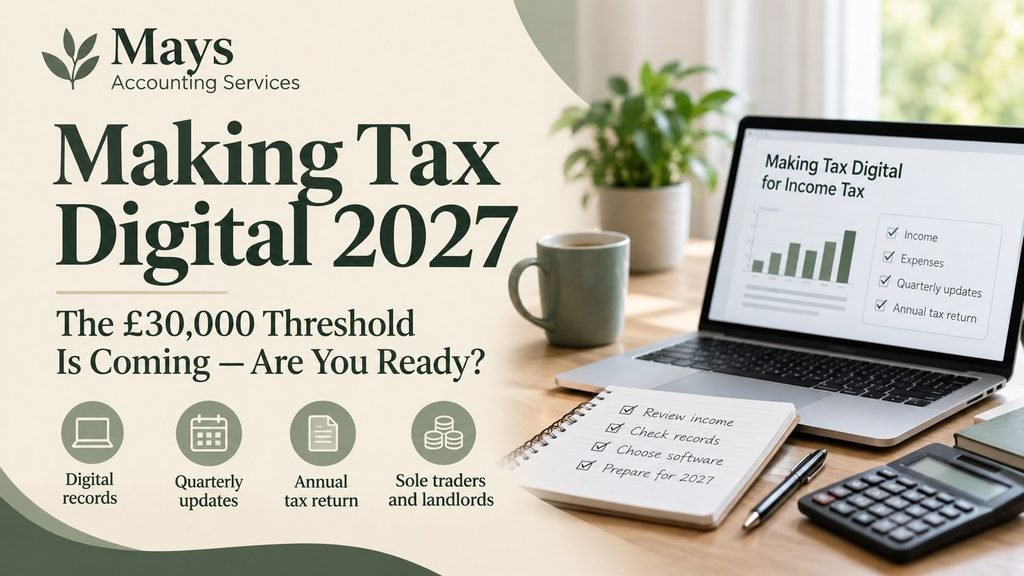
Making Tax Digital 2027 is an important change for eligible sole traders and landlords. From 6 April 2027, those with qualifying income of more than £30,000 will need to follow the new requirements for reporting their income to HMRC.
The threshold is based on your combined gross income from self-employment and property, before expenses are deducted, rather than the profit you make.
With the start date approaching, now is the time to understand what Making Tax Digital means for you and whether your records and software are ready.
Preparing for Making Tax Digital 2027 now gives you time to review your bookkeeping, explore compatible software and understand your reporting responsibilities.
What Is the £30,000 Making Tax Digital Threshold?
The £30,000 threshold applies to qualifying income from self-employment and property. If you have both, the income from these sources is combined to determine whether you meet the threshold.
For example, imagine you run a small business with gross income of £24,000 and receive £8,000 in gross rental income.
Your combined qualifying income would be £32,000.
Even if your business expenses and property costs mean your actual profit is considerably lower, your qualifying income would be above the threshold.
This is an important distinction. The calculation is based on gross income before expenses, not the profit you make after deducting your costs.
For the April 2027 start, HMRC will use qualifying income reported on your 2025/26 Self Assessment tax return to determine whether you meet the threshold.
What Changes Under Making Tax Digital from April 2027?
If you’re required to use Making Tax Digital for Income Tax, you’ll need to make changes to how you maintain your records and report your income.
Keeping digital records
You’ll need to keep digital records of your self-employment and property income and expenses using compatible software.
This means moving away from relying solely on paper records or manually preparing everything at the end of the tax year.
You may be able to continue using spreadsheets for your records, but you’ll need compatible bridging software to send your quarterly updates and submit your tax return under Making Tax Digital.
Sending quarterly updates
Instead of waiting until the end of the tax year to bring all your figures together, you’ll need to send quarterly updates to HMRC through compatible software.
These updates summarise your income and expenses. They are not four additional tax returns.
Keeping your records up to date throughout the year should also make it easier to see how your business or rental activity is performing.
Submitting your annual tax return
Making Tax Digital does not remove the need to finalise your tax position and submit an annual tax return.
You’ll still need to check your figures, include other relevant income and consider any applicable allowances or reliefs before submitting your return.
Your usual tax payment arrangements also remain in place, including the 31 January deadline for the balancing payment, subject to your individual circumstances and any payments on account.
If you need help preparing your tax return, find out more about my Self Assessment services.
https://maysaccountingservices.co.uk/self-assessment-tax-returns/
How to Prepare for Making Tax Digital for Income Tax
You don’t need to wait until April 2027 to start getting organised.
There are several practical steps you can take now.
1. Check your qualifying income
Look at your gross income from self-employment and property before expenses. If you have both types of income, consider them together.
Don’t assume that your profits being below £30,000 means you fall outside the requirements.
2. Review your bookkeeping
Are your income and expenses recorded accurately? Are your records up to date, and can you easily find the information needed to support your figures?
If you currently leave your bookkeeping until the end of the year, now is a good opportunity to establish a more consistent routine. Keeping your records organised throughout the year will help you prepare for the digital record-keeping and quarterly reporting requirements of Making Tax Digital.
https://maysaccountingservices.co.uk/bookkeeping-services/
3. Consider your software options
You’ll need compatible software if you are required to use Making Tax Digital.
Take time to understand the options available and consider what will suit your business or property income. If you already use a spreadsheet, check whether it can be used with compatible bridging software.
4. Understand your reporting responsibilities
Quarterly updates will become part of your routine, alongside the annual tax return.
Understanding what information you’ll need to maintain and submit can help you plan ahead and avoid leaving everything until the last minute.
What If You’re Not Affected Until Later?
The £30,000 threshold is not the final stage of the rollout.
The qualifying income threshold is scheduled to fall to more than £20,000 from 6 April 2028, bringing more sole traders and landlords within the requirements.
Even if you don’t need to start in April 2027, it is worth keeping an eye on future changes and reviewing your position as your income changes.
There are also exemptions from Making Tax Digital for Income Tax in certain circumstances. For example, some people may qualify because they are digitally excluded, while other exemptions depend on specific circumstances or information included in their tax returns.
Don’t assume you must join simply because your income exceeds the threshold, or that you’re exempt because you haven’t received a letter from HMRC. Check the current HMRC guidance to establish when the rules apply to you and whether an exemption is available.
You can use HMRC’s Making Tax Digital eligibility checker to check when you need to start and whether you may qualify for an exemption.
Get Ready for Making Tax Digital with Mays Accounting Services
Making Tax Digital will mean a change in how many sole traders and landlords maintain their records and report their income.
Getting ready for Making Tax Digital 2027 now can help you prepare your records and establish a routine before the new requirements apply.
At Mays Accounting Services, I provide bookkeeping and Self Assessment support to help individuals keep their financial information organised and understand their tax reporting responsibilities.
If you’re unsure whether Making Tax Digital will affect you, need help getting your records in order, or want to discuss your bookkeeping requirements, get in touch with Mays Accounting Services.
Don’t wait until the changes become compulsory to find out what you need to do. A little preparation now can make the transition much easier.
This article provides general information and is not a substitute for advice based on your individual circumstances. Eligibility, thresholds and exemptions should be checked against current HMRC guidance.
Further information: HMRC — Find out if and when you need to use Making Tax Digital for Income Tax.